What's actually happening inside the box people call "warm" or "punchy."
Ask ten engineers what makes a preamp sound good and you'll get ten different adjectives: warm, punchy, silky, aggressive, clean, glued. All of them are describing something real, but almost none of them are describing a mechanism. A preamp's character isn't a mystery or a matter of brand mythology, it comes from a small handful of measurable design decisions, and understanding them is the difference between chasing a sound and actually knowing why a specific preamp gets you there.
Gain stage topology: tube, solid-state, or transformer-coupled
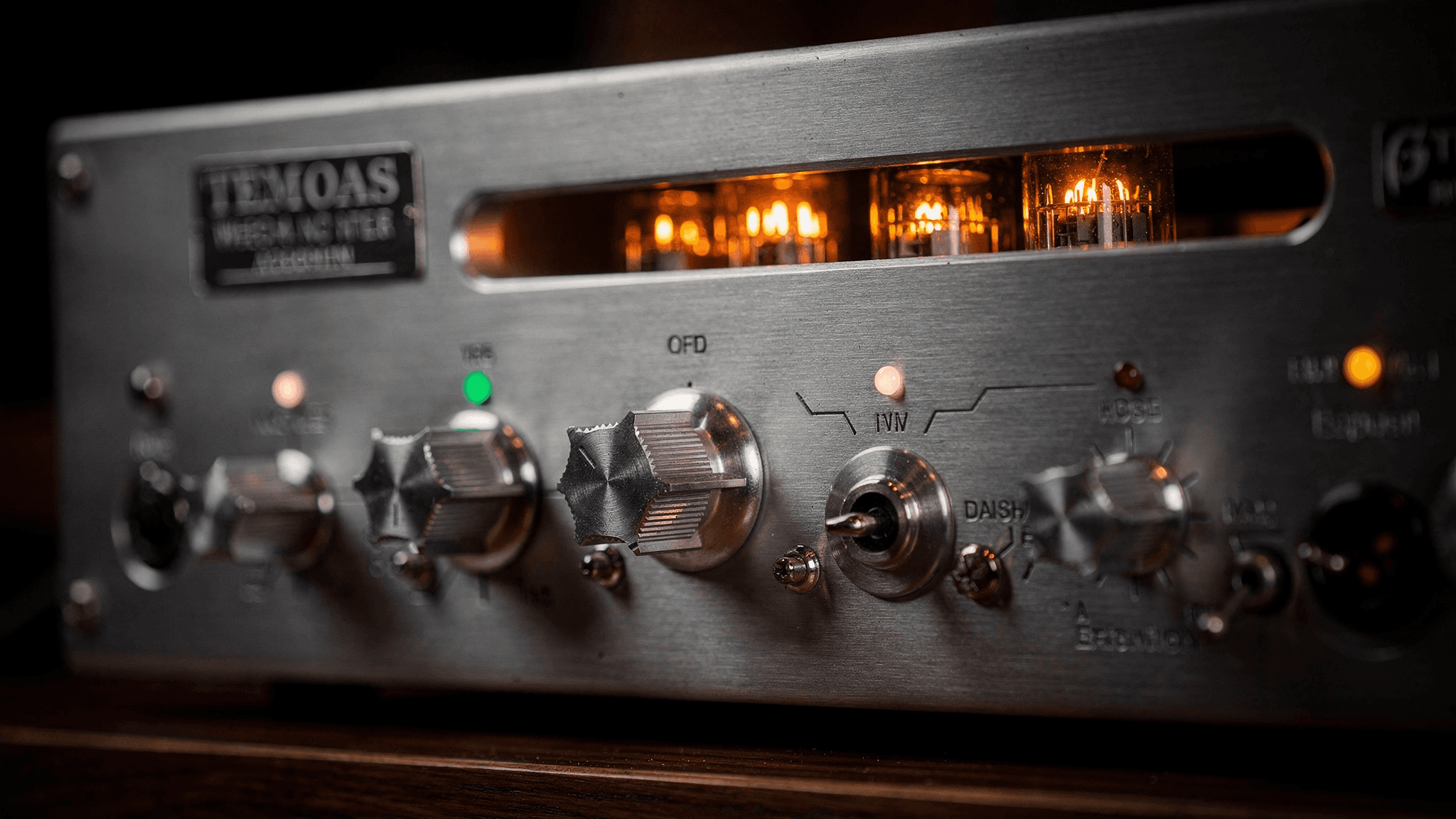
The first and biggest fork in the road is what's actually doing the amplification. Tube preamps use vacuum tubes, which introduce soft, mostly even-order harmonic distortion as they're pushed, which is a large part of what people are describing when they call something "warm." Solid-state designs using transistors or op-amps tend to be faster and more linear, with distortion characteristics that lean toward odd-order harmonics when pushed hard, which reads as more aggressive or "edgy" rather than warm. Transformer-coupled designs add a completely different flavor on top of either of these: transformers introduce their own low-frequency saturation and a subtle high-frequency rolloff, which is why so many classic-sounding preamps have transformers in the signal path even when the actual amplification stage is solid-state.
"Warm" isn't a mixing knob setting. It's a byproduct of a specific kind of distortion, at a specific frequency, that happens to be pleasant to human ears.
Headroom and how a preamp behaves under pressure
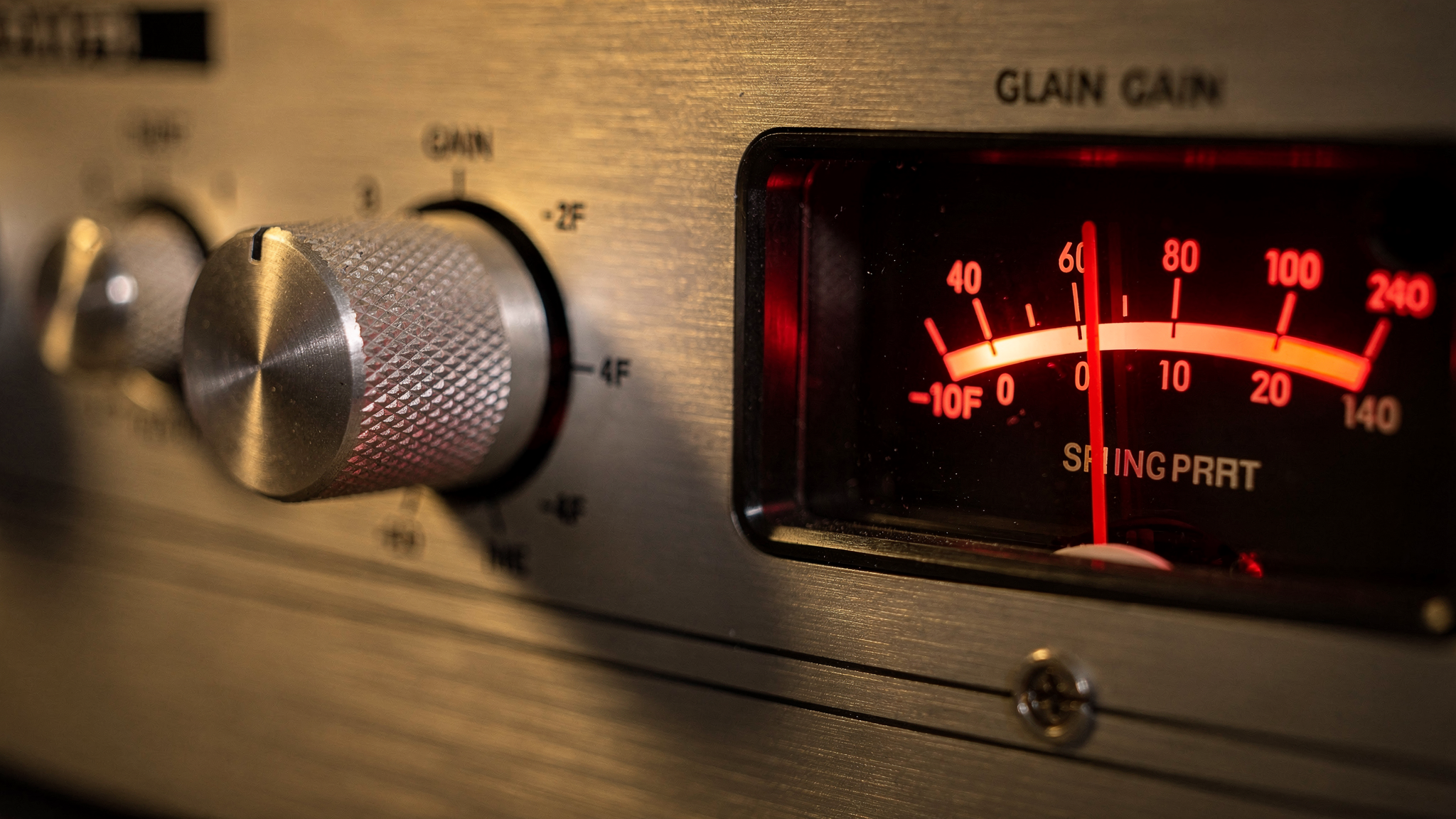
Every preamp has a point where it stops behaving linearly and starts to compress and distort, and where that point sits, and how gracefully the preamp behaves once you cross it, defines a huge part of its personality. A preamp with generous headroom stays clean far past where most sources would already be pushing it, which is why some preamps are prized specifically for staying transparent on hot signals. A preamp designed to be driven, on the other hand, is built so that pushing it past unity gain produces a specific, often desirable kind of saturation rather than harsh clipping. Neither approach is "better" in the abstract; they're built for different jobs, and a preamp's headroom characteristics matter more to its actual sound than almost any spec on its datasheet.
Input impedance and its effect on the source
Impedance is the quietest variable on this list and one of the most overlooked. A preamp's input impedance interacts directly with the output impedance of whatever's plugged into it, particularly with passive ribbon and dynamic microphones, changing the frequency response and transient behavior of the source before any deliberate "coloring" circuitry even engages. The same microphone can sound noticeably different, brighter, darker, more or less detailed, depending purely on the impedance of the preamp it's plugged into, with no tubes, transformers, or saturation involved at all. This is part of why swapping preamps on the same mic and source can produce such different results even when both preamps measure "flat" on paper.
Frequency response shaping, deliberate or not
Some preamps are designed to be as flat and neutral as physically possible. Others have a deliberate tilt built in, a slight bump around the low-mids for perceived weight, a gentle lift in the presence range for perceived clarity, that's baked into the circuit rather than something you'd dial in with an EQ afterward. This shaping is usually subtle, often less than a couple of dB, but it's consistent and it's there on every single signal that passes through, which is exactly why it registers as a "sound" rather than an obvious effect.
Put together, not chosen individually
No single one of these elements defines a preamp's character in isolation. It's the combination, gain stage topology, headroom behavior, input impedance, and baked-in frequency shaping, that adds up to what an engineer eventually just calls "the sound." Understanding the pieces doesn't make the magic disappear; it just means you're choosing a preamp because you know what it's actually going to do to your signal, rather than because a review used the word "warm" and you decided to believe it.