Every room is an instrument. Before a single fader moves, the walls, corners, and ceiling of your studio have already EQ'd, compressed, and reverberated everything you hear. Acoustic treatment is how you tune that instrument — and the material you choose matters as much as where you put it. Different materials do fundamentally different jobs: some turn sound into heat, some scatter it in time and space, and some resonate sympathetically to swallow specific low frequencies. Here are the four families that cover almost every treatment problem a recording or mix room will throw at you, along with the companies that have proven each approach over decades.
1. Rigid mineral wool and glass wool: the broadband workhorse
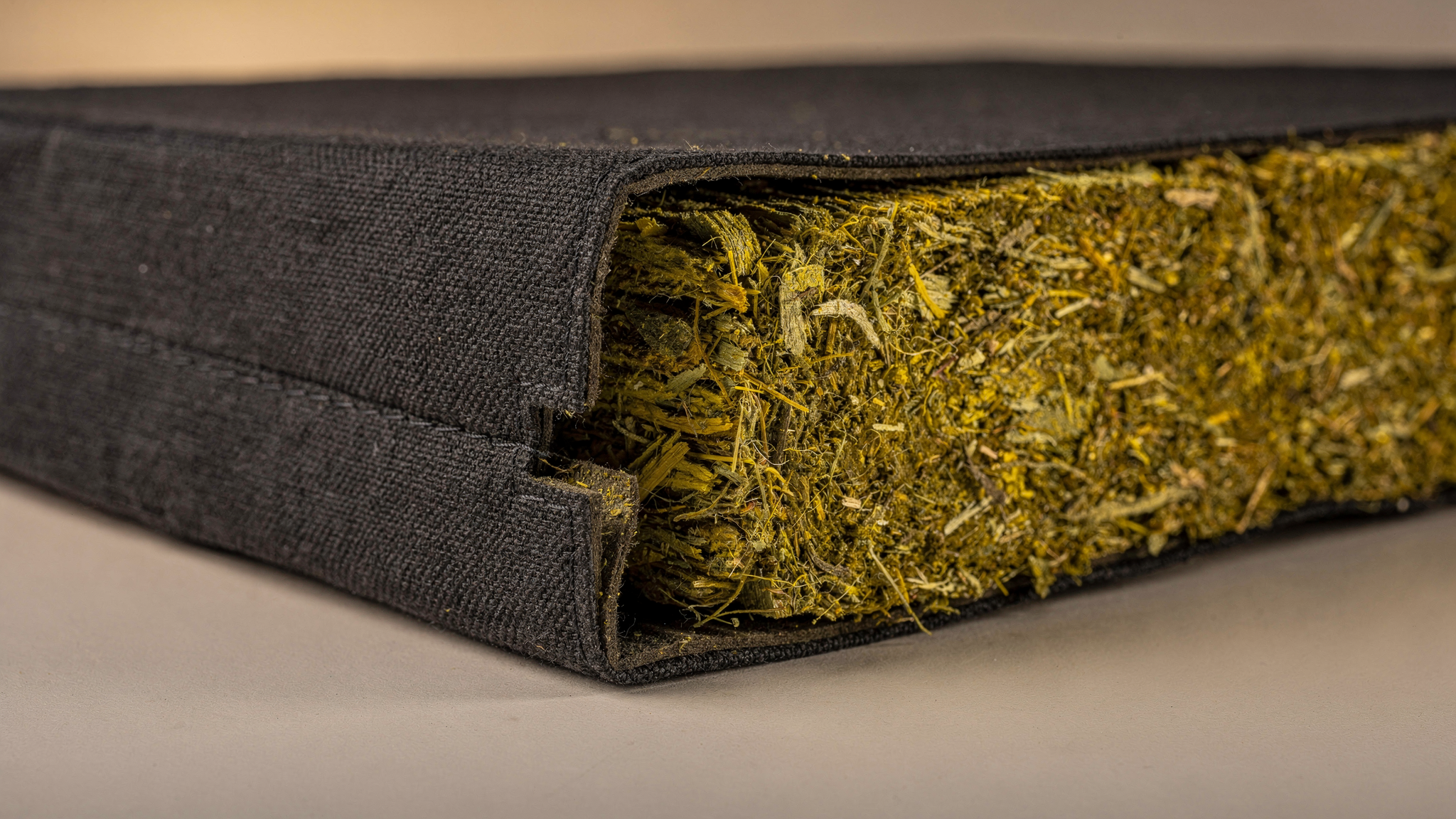
The backbone of nearly every professionally treated room is the porous absorber: rigid panels of compressed mineral wool (rockwool) or glass wool, typically 2–6 inches thick, wrapped in acoustically transparent fabric. As a sound wave pushes air through the tangle of fibers, friction converts acoustic energy into tiny amounts of heat. The physics reward thickness and airflow resistivity — a 4-inch panel spaced off the wall absorbs meaningfully lower than a 2-inch panel mounted flush, which is why first-reflection points and corners get the thick stuff.
Psychoacoustically, this is the material that kills the short early reflections (under roughly 20 ms) that smear stereo imaging and make you mistrust your panning decisions. GIK Acoustics built its reputation on exactly this — its fabric-wrapped mineral wool panels and corner bass traps have been the default recommendation on studio-building forums since 2004. Primacoustic takes the same approach with its Broadway series of high-density glass wool panels, favored in broadcast and post-production rooms.
2. Sculpted open-cell foam: geometry over mass
Open-cell polyurethane and melamine foam works on the same friction principle as mineral wool, but with far less density — so manufacturers compensate with shape. The classic wedge and pyramid profiles aren't decoration: the sculpted surface increases the effective surface area and presents a gradual impedance transition to incoming waves, extending absorption compared to a flat sheet of the same material.
Be honest about what foam can and cannot do. It is excellent at taming flutter echo and mid/high-frequency reflections in vocal booths, control room side walls, and content-creation spaces. It does almost nothing below ~250 Hz, and rooms treated only with thin foam end up dark on top and boomy on the bottom — the classic "dead but not accurate" small-studio sound. Auralex Studiofoam is the benchmark here; its 2-inch and 4-inch wedge panels have been studio staples for over 30 years, and Auralex publishes absorption coefficients per thickness so you can deploy it where it actually works.
Foam doesn't fix a room. It fixes the top half of a room — and knowing the difference is the whole game.
3. Number-theory diffusers: QRD wells and skyline blocks
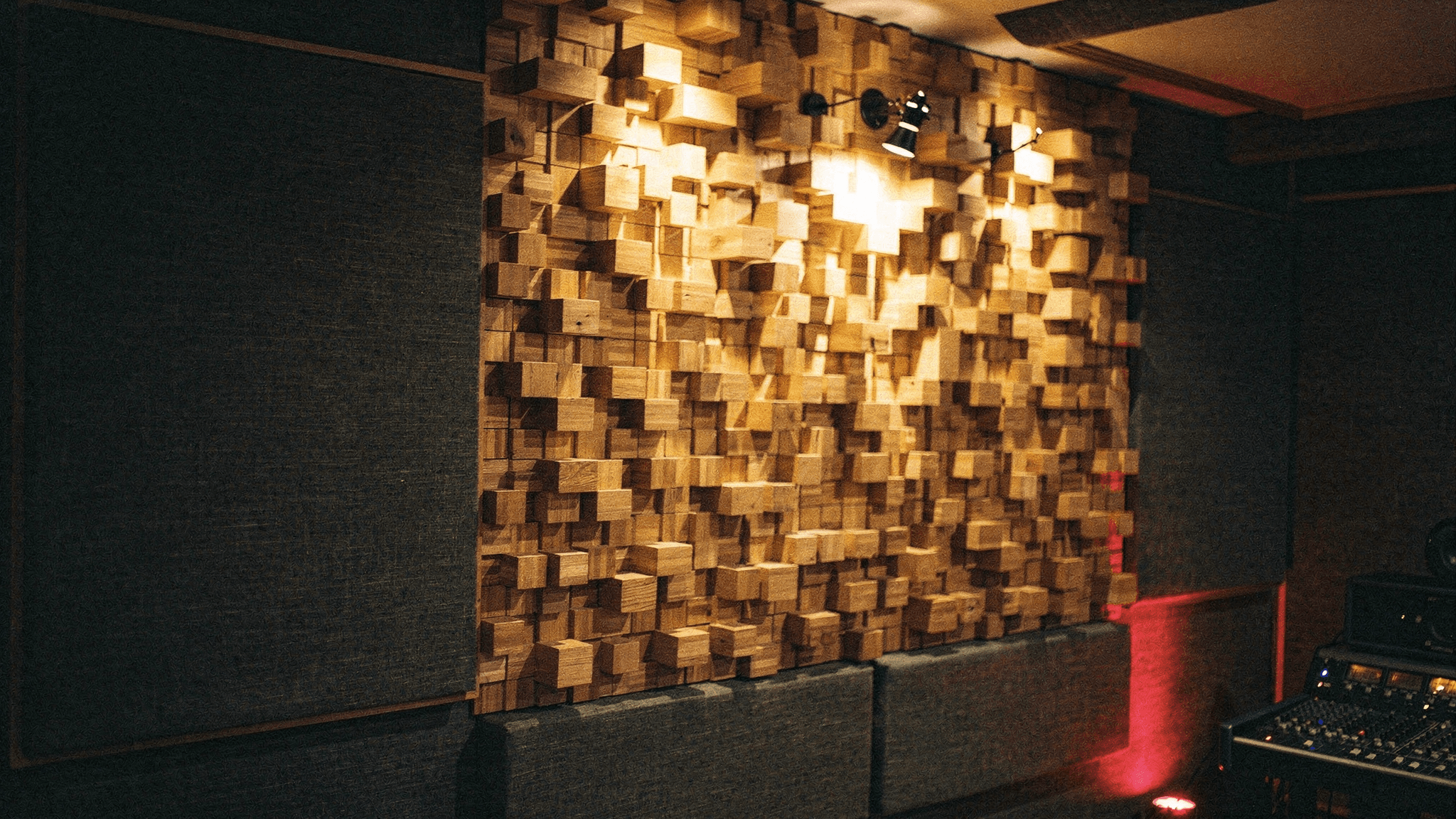
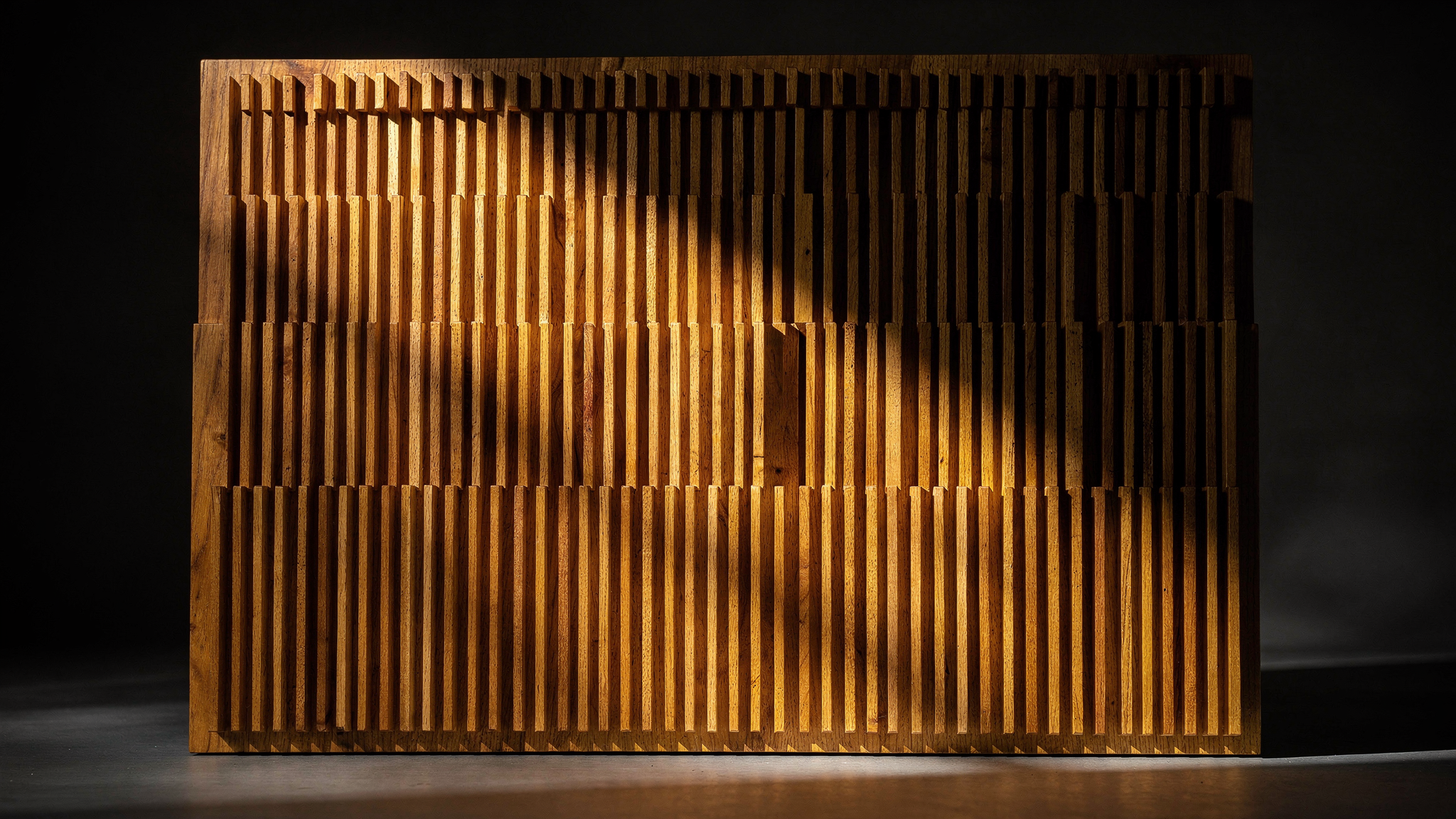
Absorption removes energy; diffusion redistributes it. A diffuser is a rigid surface — wood, polystyrene, or molded thermoplastic — machined into a sequence of wells or blocks whose depths follow a mathematical sequence, most famously the quadratic-residue and primitive-root sequences. Each depth re-radiates the reflection at a different phase, scattering a single hard slap into a dense, even spray of micro-reflections. The result is a room that still sounds alive, but without the comb filtering and discrete echoes that hard parallel walls create.
This category was essentially invented commercially by RPG Acoustical Systems, whose 1987 QRD 734 was the first commercially produced sound diffusor, and whose Skyline — the familiar city-grid of square columns — was the industry's first two-dimensional primitive-root diffusor, scattering sound hemispherically instead of in a single plane. Portugal's Vicoustic brought the same math to lighter, more affordable molded panels like its Multifuser series, now common on the rear walls of mix rooms worldwide. Diffusion belongs on the rear wall and ceiling of a control room and in live rooms where you want size without slap.
4. Tuned membrane bass traps: precision below 125 Hz
Below about 100 Hz, porous materials need impractical thickness to work, because absorption requires the material to sit where air particle velocity is high — and for a 40 Hz wave that's feet, not inches, from the wall. The engineering answer is the resonant absorber: a sealed cavity fronted by a flexible membrane (or a perforated panel, in the Helmholtz variant). Sound pressure drives the membrane like a drum head in reverse, and the mass of the membrane plus the depth of the cavity determine which frequencies get absorbed. Because these are pressure-based devices, they work best pushed tight into corners and against walls — exactly where room modes peak.
The payoff is surgical: you can flatten a stubborn 45 Hz axial mode without deadening the mids and highs the way stacking ever-more mineral wool would. GIK's Scopus tuned membrane traps come tuned to 40, 70, or 100 Hz center frequencies (or custom-built to your room's measured problem), absorbing in a band from roughly 35–125 Hz and leaving everything above intact. RPG's Modex line applies the same pressure-zone principle at the high end of the market. These are the finishing tool: measure first, treat broadband first, then tune out what remains.
Broadband treatment gets you a good room. Tuned traps get you your room.
Putting the four together
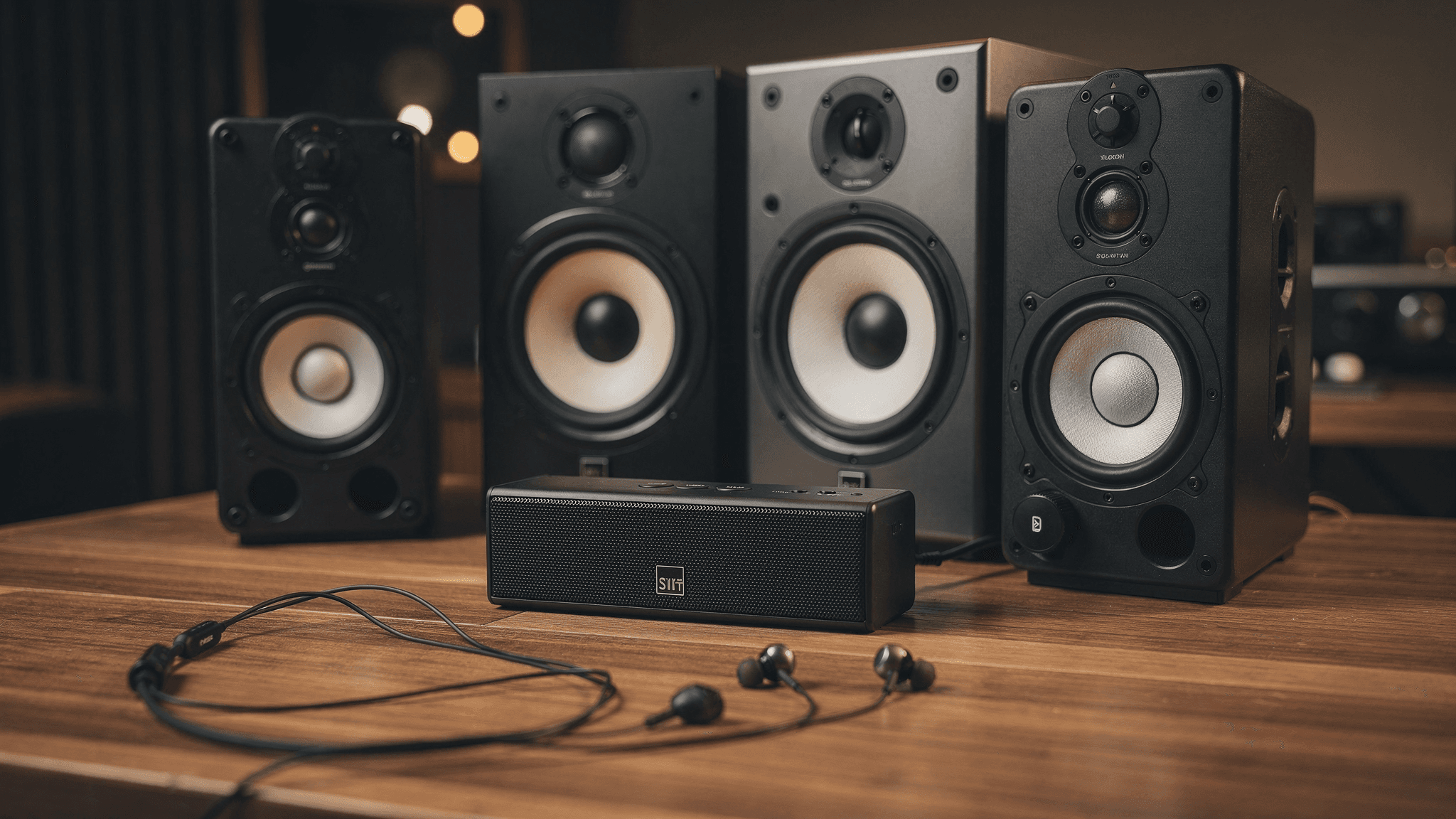
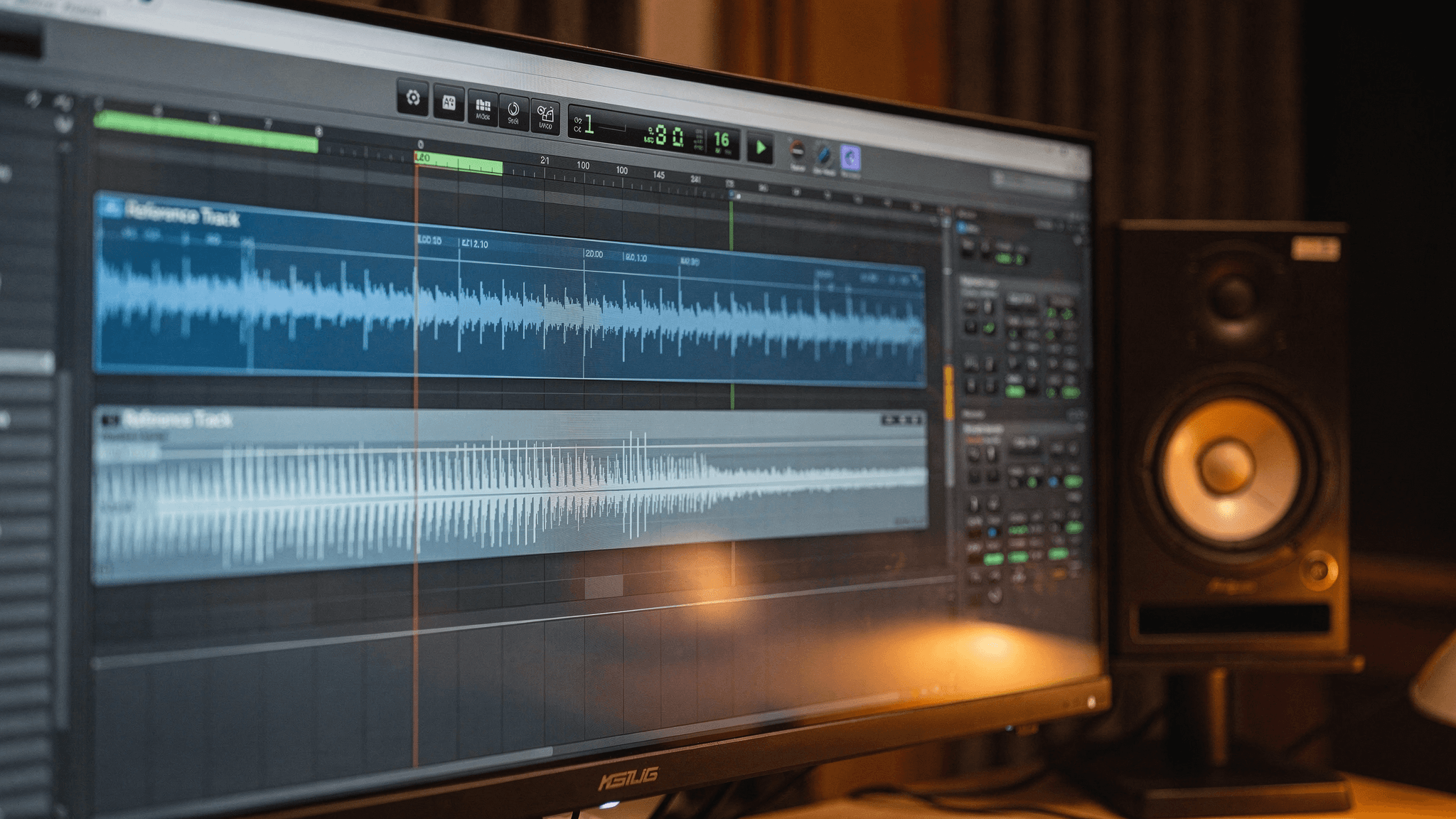
A dependable order of operations: thick porous absorption (mineral wool) straddling the corners and at first-reflection points; foam only where you need economical mid/high control; diffusion on the rear wall once the room is under control, to restore a sense of space; and tuned membrane traps last, aimed at whatever modal peaks survive — identified with a measurement mic and REW, not by ear alone. Each material solves a problem the others can't. The rooms that translate — where a mix sounds the same in the car, on earbuds, and in the club — are almost always the rooms that used all four.